




HOW TO FIND YOUR WATCH BAND SIZE
When purchasing a watch the first thing we look for is the design and overall style of the watch. We ask ourselves many questions to ensure this is the timepiece we want to have on our wrists and sit alongside in our collection. But very quickly, the size of the watch becomes the focus of our attention since this will largely determine whether the watch is objectively wearable on our wrist. A large factor at play with that is the size of the watch band and how you can find the perfect size. Knowing how to find your watch band size will be a factor that could determine whether you choose one watch over another so today we’re going over the different types of watch bands you may come across and how to find your size.
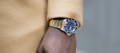
Source :Quora
For the most part, the bright shiny lights in the windows of watch dealers and boutiques catch our eyes as it reflects off the metal bracelets of the watches on display as we walk past. Metal, be it steel, titanium, yellow, rose or white gold all share a similar property and that's they all contain links. A bracelet is made up of many individual segments which are referred to as links. Naturally the size of the links will affect how the bracelet fits and hugs our wrists meaning that generally speaking the larger the links the harder it can be to find the perfect fit. This is because it becomes harder to make fine adjustments needed to fit your wrist whilst a bracelet with smaller links can make for a perfect fit
The metalic straps
A classic and clear example of this is easily seen with Rolex, look no further than the famous Rolex Datejust. The Datejust is offered on Jubilee and Oyster bracelets and whilst both have different looks and styles, they also have a very different fit to them. The Jubilee band is made up of small 5 link segments compared to the larger 3 link segment of the Oyster. Because of these differences, the Jubilee band is able to flow and drape elegantly around your wrist, with the increased amount of links it can hug both the size and shape of your watsi better than the Oyster band can. However, just because one has smaller linsk than the other does not mean you cannot find the perfect fit for both.
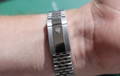
Source :Milienery watches
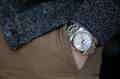
Source : Hodinkee
In regards to the Jubilee band, the AD will be able to look at how the bracelet hangs off your wrist and remove or add links as needed. Additionally the clasp on the Rolex bracelets allows for a quick 5 mm adjustment so finding the perfect fit is made easy. You should aim to have the watch sit comfortably around your wrist behind the Radius bone. Not so tight it’s not letting your wirts breath but not too loose that your watch slides up and down your entire arm. Of course, it is entirely personal preferences that’s at play here as some prefer it to be tighter or looser than others but a good rule to follow is have the watch sit comfortably behind your radius bone.
Everything becomes a whole lot easier if your bracelet is not made from any type of Metal, leather and rubber for example are another classic strap option and you can easily find the right size for you. Just like your typical leather belt, a watch leather and rubber strap features one side with holes running along it and the other a pin and buckle to fasten the two sides together. You can just slide the leather as close to your wrist within the limit of being comfortable for you and then insert the pin to lock in place.
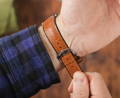
Source : Watch Obsession
The most adjustable watch straps
Some leather and rubber straps feature a fold over clasp like a metal bracelet would, however, all of these clasps require you to set the clasp in the right hole. This means once you have the right size you can simply lock the clasp in that hole and every time you put on the watch it will be to your watch band size. Rubber is especially good if you are off and about doing sports as it is very durbvake adn quick and easy to adjust the size if your wrist expands or contracts.
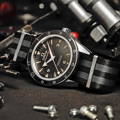
Source : Belle Plagne
Similar to this, Nato straps work in a similar fashion to leather except that they almost never have a clasp. This system is exactly like a belt as there is just one piece of continuous fabric but instead of leather it is made from nylon. Simply thread the Nato strap through the lugs of your watch and then like with the leather strap, slide the Nato strap through the buckle until it’s comfortably tight on your skin. Push the pin through and you’re all good with a Nato strap that's your perfect size
In short, metal raclette with shortest and more links will make it easier for the watch band to fit your wrist perfectly. However, larger link bracelets like the Rolex oyster bracelet can still be sized to your wrist with the help of an assistant at your local AD. Make sure the watch sits comfortably on your wrist and behind your radius is a good rule to follow. Again, everyone's personal preference will differ, so long as you find the best watch band size for your wrist, that's all that matters
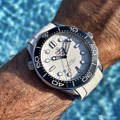
Here at ZEALANDE we offer the best Swiss-manufacturer rubber straps designed to perfectly fit your case. With there benign 8 holes for you to choose from, it’s safe to say you can easily find the perfect watch band size for your wrist with us. Not to mention you can always quickly adjust the ZEALANDE rubber strap anytime you need so head on over to our website to select the perfect coloured rubber strap for you!


