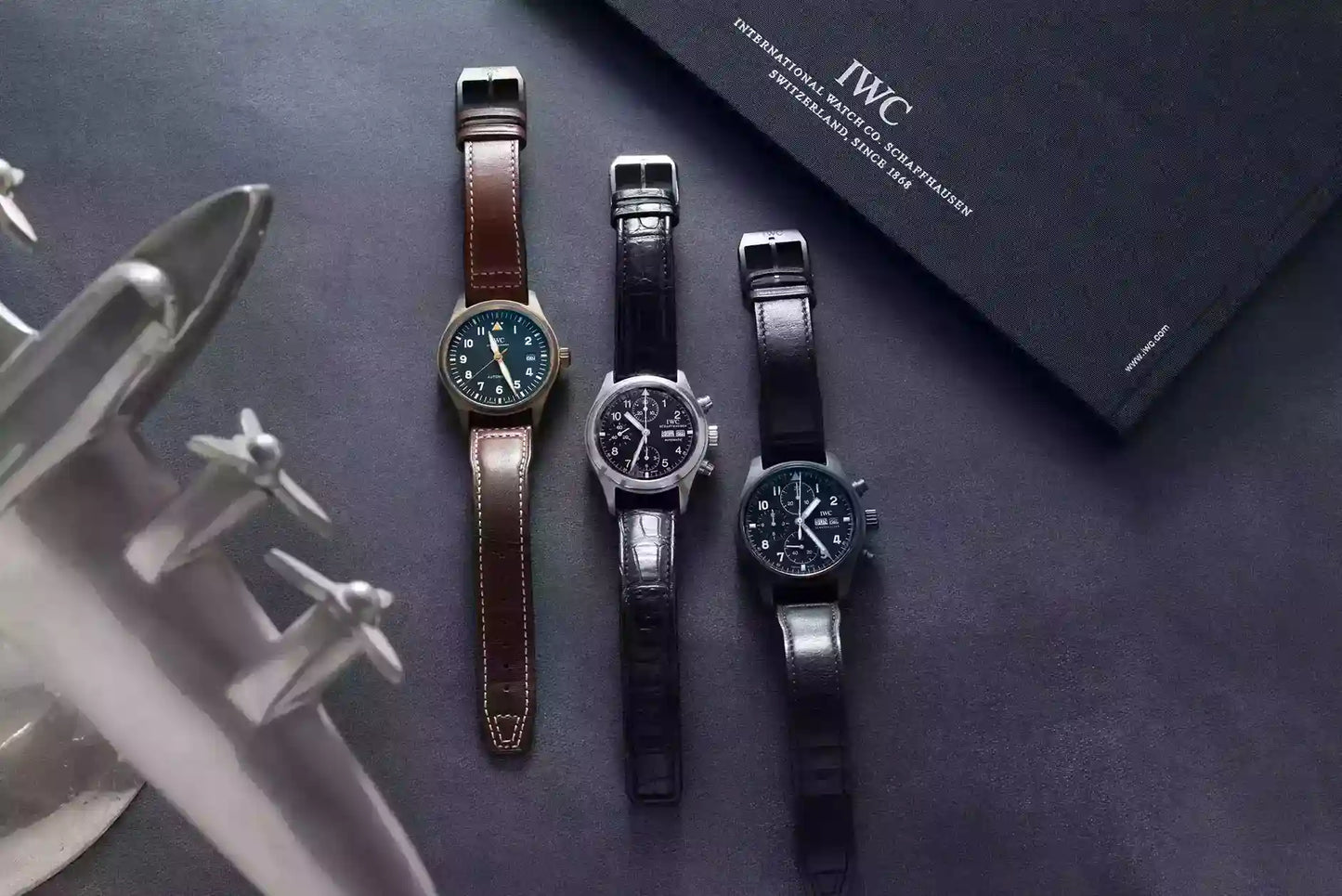
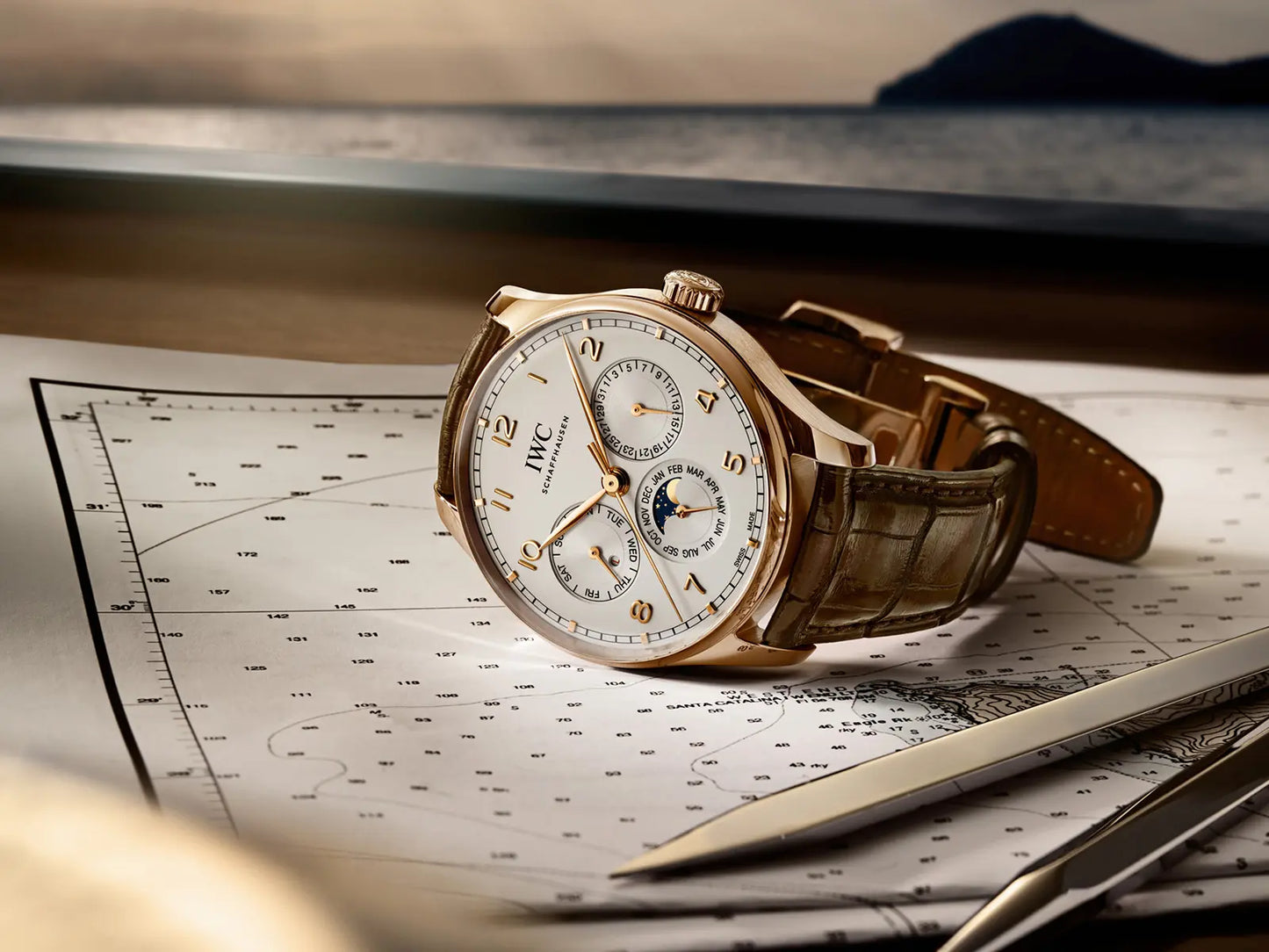
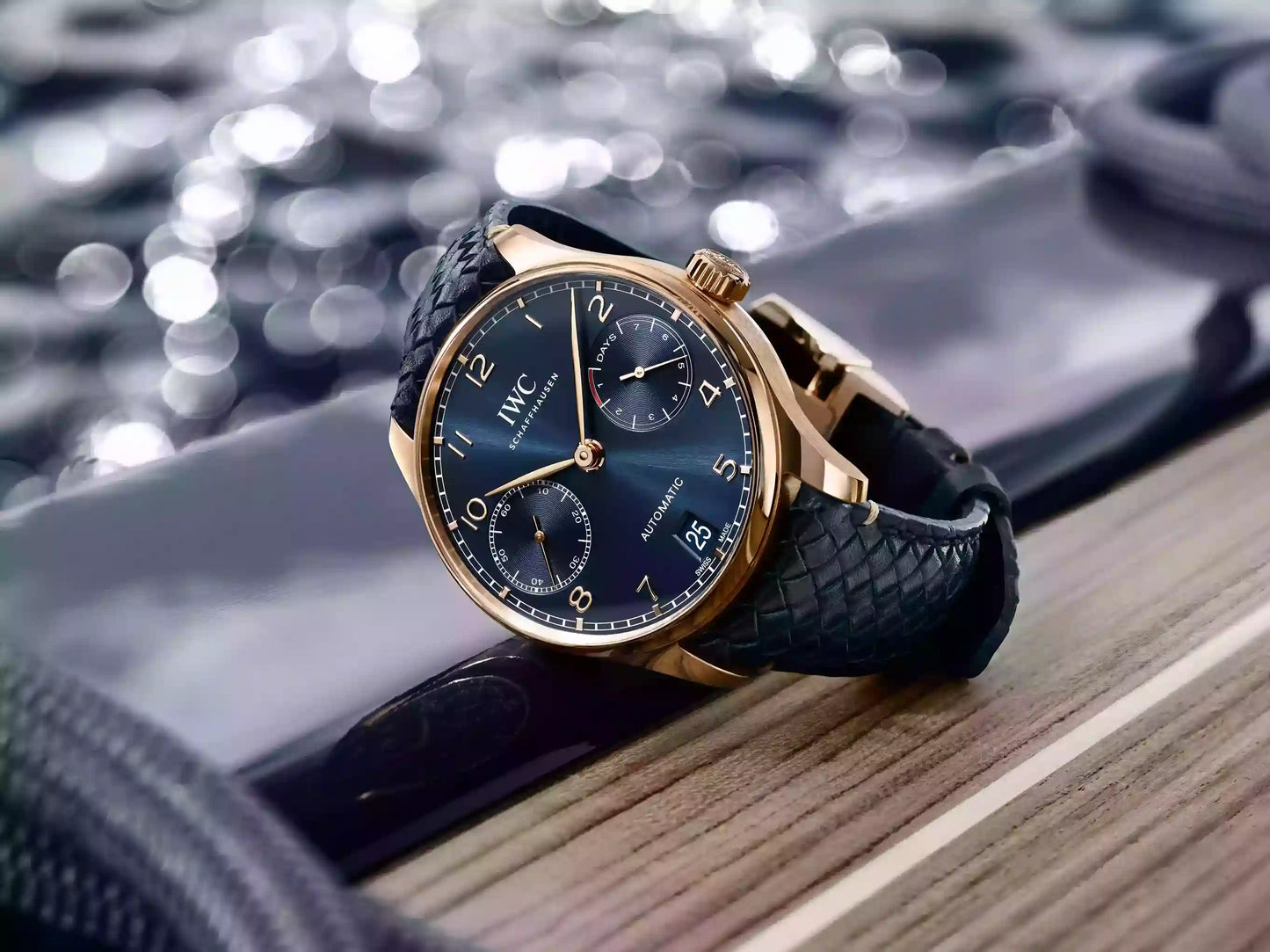
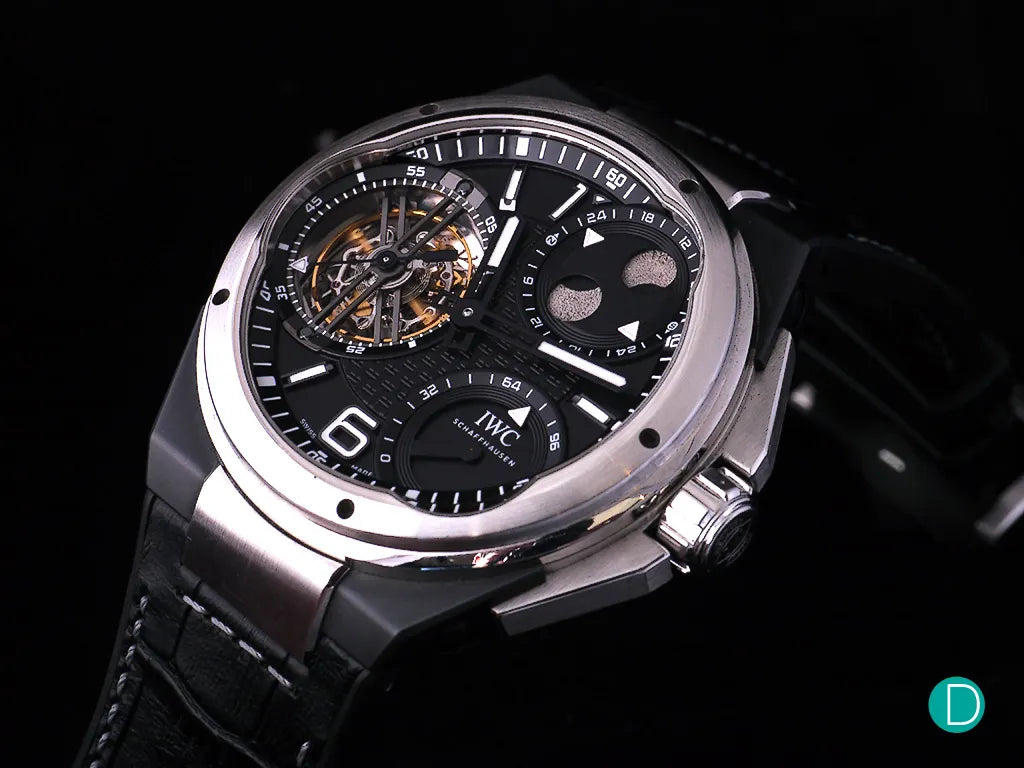
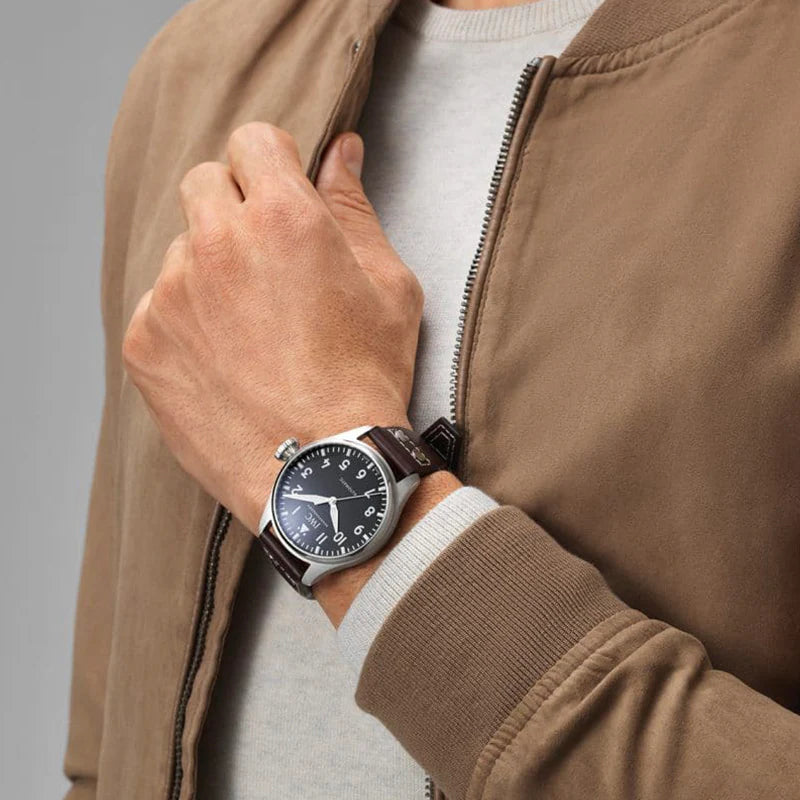
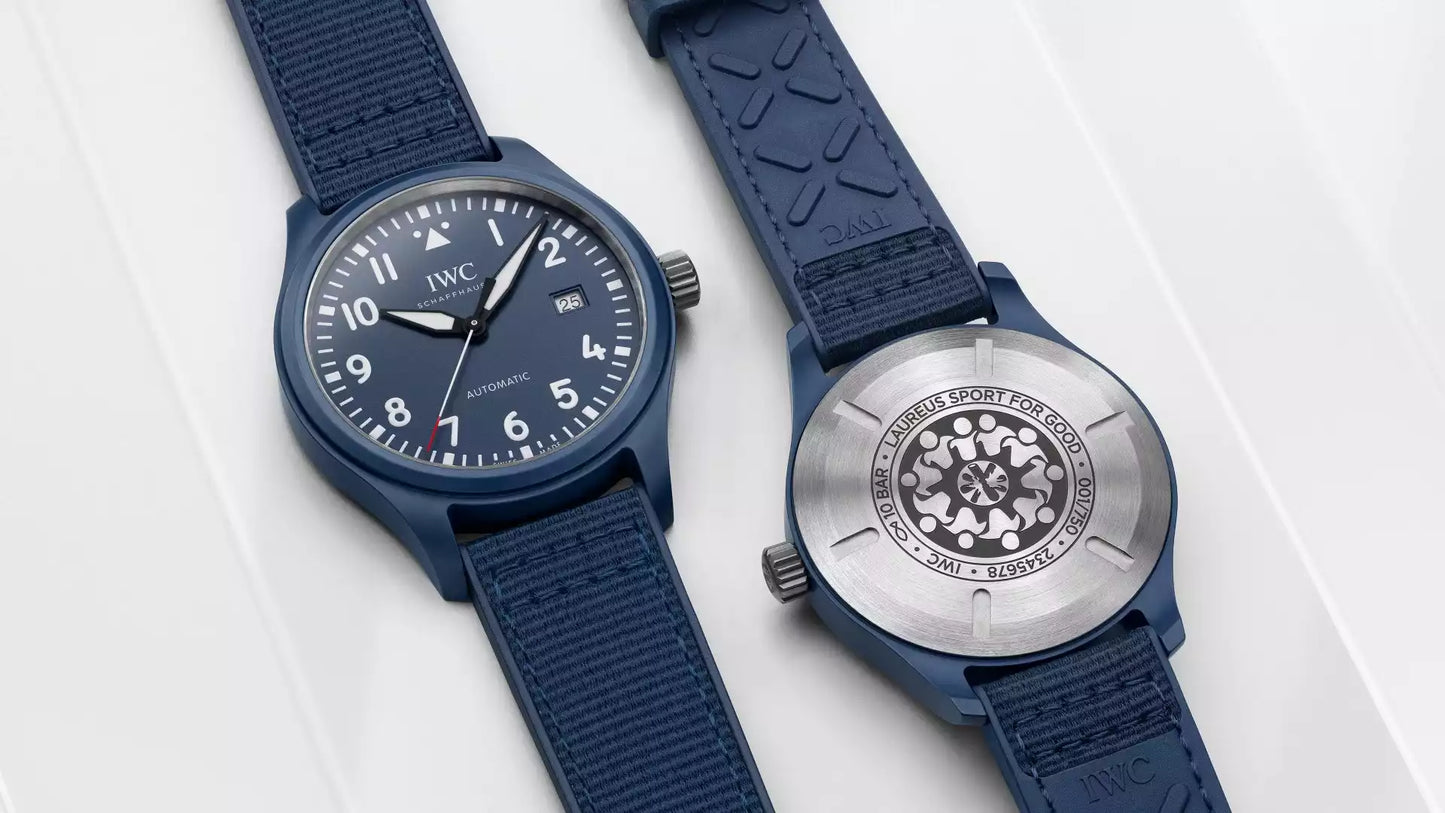
In the world of luxury watchmaking, few names carry as much weight and heritage as IWC Schaffhausen. Known for its fusion of engineering excellence, sophisticated design, and functional durability, IWC has earned its place among the most respected Swiss watch manufacturers. From crafting timepieces for pioneering aviators to developing robust diving watches and elegant chronographs, IWC has consistently pushed the boundaries of what a mechanical watch can achieve. Founded in the late 19th century, IWC has remained faithful to its roots while evolving into a symbol of refined technical mastery.
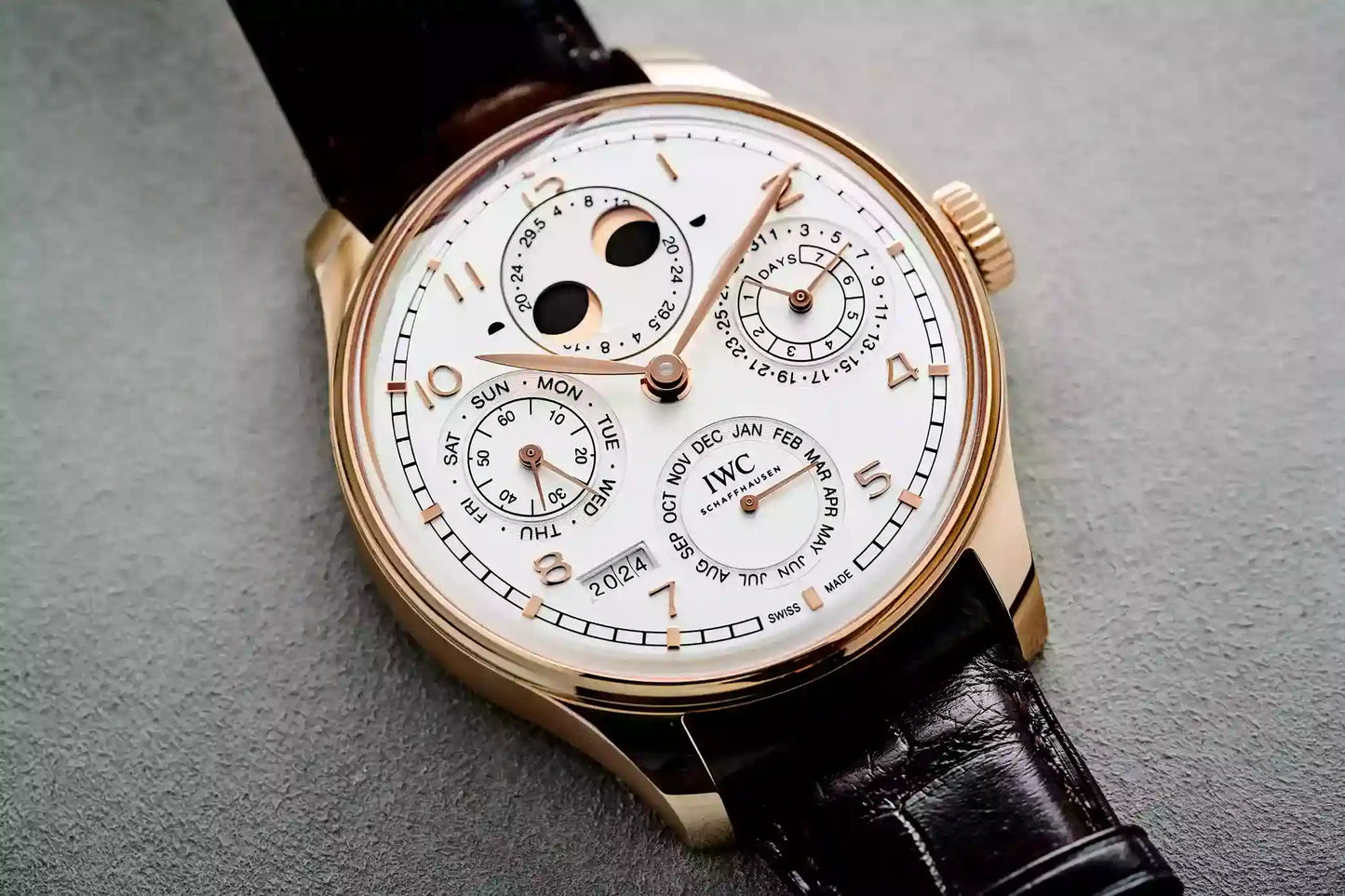
This article will take you on a journey through the creation and history of the 10th most recognized Swiss luxury watch brand in the world. Whether you’re an aspiring watch collector or simply curious about the world of high-end watchmaking, here’s everything you need to know about IWC.
The creation of IWC: a brand born from the meeting of innovation and tradition
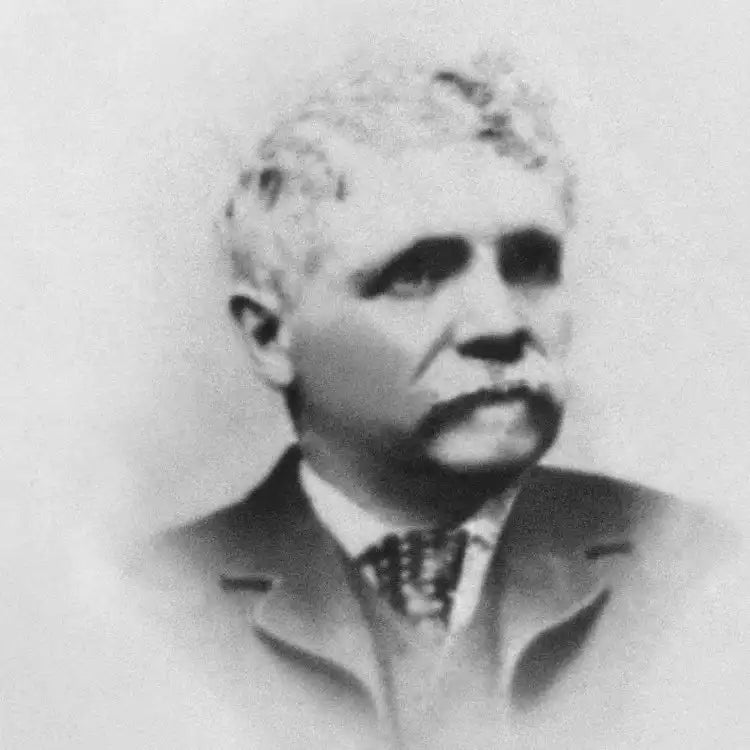
The history of IWC Schaffhausen is pretty unique : with an American creator but a Swiss-located company, it is kind of a reverse of an American dream. The founder, Florentine Ariosto Jones, moved from the USA to Switzerland in 1868. His purpose: combine the US production technologies with the Swiss watchmaking knowledge. Because of that story, the company was named IWC : International Watch Company. The company was then founded in the Swiss city of Schaffhausen, where the headquarters remain to this day. At the time, in 1875, they hardly hosted 200 employees, while today no less than 700 work for the company. Five years later, machine manufacturer Johannes Rauschenbach took over the industry, but not for too long; in 1905, his son replaced him at the head of the industry. He will be the last private owner of IWC.
As the example of innovation IWC is, the brand has always set the bar high in terms of creative design and high-performance calibers. In 1915, the brand from Switzerland was the first ever to start production of the two very first movements exclusively reserved for the wristwatches : the caliber 75 (without second) and the 76 (with small seconds hands).
And in 1931, the design and capacity of IWC watches were again upgraded : new rectangular watches hosted the new caliber 87 barrel-shaped.
Years later, in 1936, the launch of the first “Special Watch for Aviators” announced the start of a new era : featuring a rotating bezel with a marker arrow to record take-off times, as well as an antimagnetic escapement, this brand-new watch is ready to be kicked off.
The evolution of IWC through the centuries
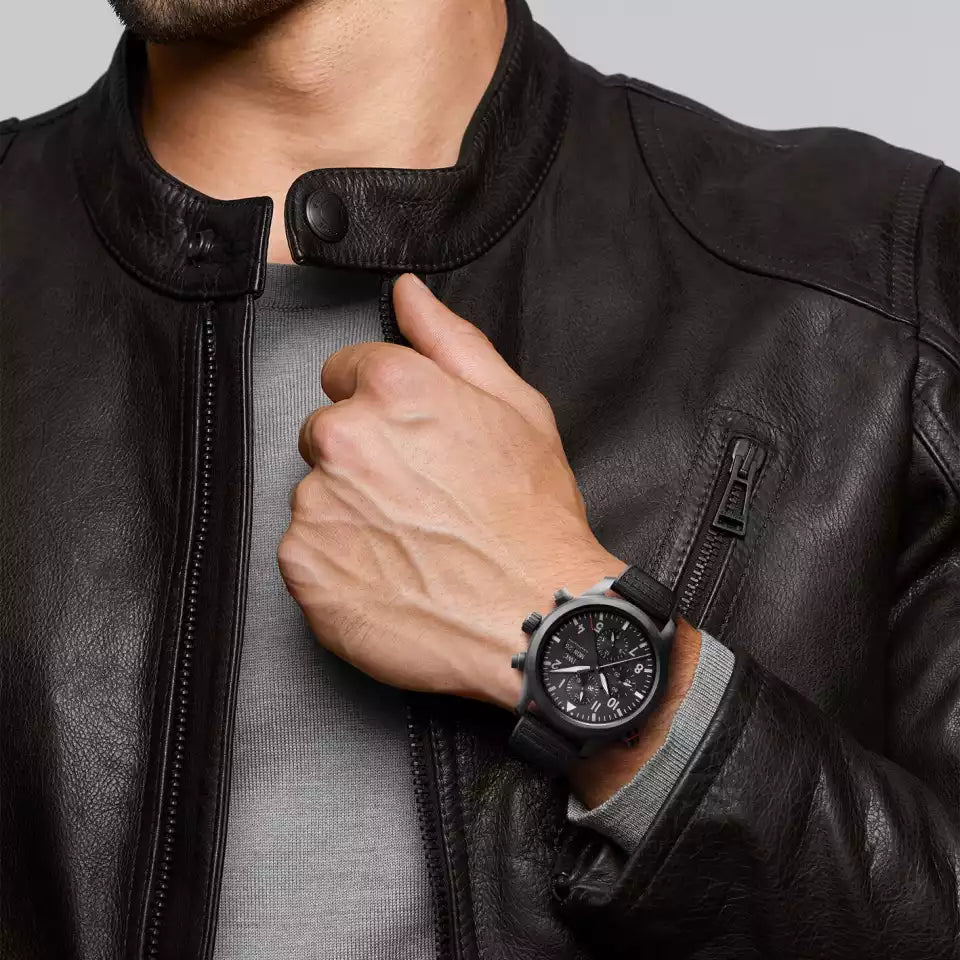
Even during hard times, a deeply rooted brand like IWC knew how to keep going. In 1940, in response to the needs of the time, IWC developed the Pilot Grande Montre 52 T. S. C. with a central seconds hand.
In the middle of WWII, IWC unveiled the first W. W. W., a new automatic wristwatch. Designed for British Army forces, the watch is stamped on the case back with the three letters W, standing for “Watch, Wrist, Waterproof,” and a royal arrowhead as a proprietary mark. Just after the war, Pellaton was appointed as IWC’s new technical director. His first creation was the caliber 89, with its center-seconds hand and exceptional precision. He also developed a particularly efficient bidirectional ratchet winding system, which became known as the Pellaton winding system.
In 1948, two years later, the model Mark XI, mostly famous for its use by the Royal Air Force, just came out. Fitted with an 89 caliber, the watch is protected by a second soft-iron inner casing against magnetic fields.
Actually, the first ever watch created by IWC came out years before that, in 1885. The Pallweber is a pocket watch featuring an innovative approach to telling the time with a digital display for hours and minutes. Then comes the launch of the Special Pilot’s watch (ref. IW436 with a black dial), which comes with inner rotating bezels and an anti-magnetic case.
But the inauguration of a new collection had to wait until 1936: this year marked the launch of the “Ingenieur” watch with automatic winding, the same year Homberger took over IWC direction. Its simple, round design in stainless steel has since been updated to become a distinctive feature of this sporty yet elegant watch collection. In the first half of the 20th century, IWC launched many of their most famous watches, which would soon turn into whole collections, but we will talk about it in more detail later.
1950 marked the transition to the modern era : Albert Pellaton created the caliber 85, IWC's first self-winding movement. The innovative click winding system replaces traditional gears and is a patented IWC achievement of the time. This creation will change the direction of all future editions (until the day they do even better). Nine years later, IWC proved that it can keep innovating by creating the new design of the caliber 44, IWC's first automatic movement for women's watches.
1969 came in, where IWC participated in the development of the Beta 21 quartz movement, created to compete with the Japanese quartz movement (the 1st quartz watch was a Seiko, which had come out a few months before). In order to counter this new movement and hold their ground as masters of watchmaking, 21 Swiss houses joined forces; among them were Rolex, Omega, Patek Philippe, Zenith, Longines, and IWC. The Beta 21 was the first wristwatch caliber with quartz control (oscillation frequency 8,192 Hertz)-a revolution in watchmaking. The Da Vinci is the first wristwatch equipped with the Beta 21 quartz movement.
Finally, the birth of the 9721 caliber took place in 1977. It was IWC's first pocket watch with a calendar and moon-phase display. IWC begins production of its first models with complications, including a series of skeleton pocket watches.
Emblematic IWC collections
1939 : Portuguese collection out to answer the need of an oversized watch. Two Portuguese merchants commissioned a series of wristwatches featuring the extremely precise calibers of pocket watches; the Portugieser was born.
1967 : The launch of the Aquatimer collection dedicated to diving marks the beginning of a fruitful new adventure for IWC. With its unprecedented water resistance to 20 bars and its stainless steel dial, the Aquatimer is the must-have watch for professional divers. It even comes in color with a blue rubber strap, staying in tune with the water theme.
1976 : The appearance of the Ingenieur changed significantly. Designer Gerald Genta (1931-2011) gave it a completely new look and design, showcasing a silver dial and a smaller diameter size. Today, the Ingenieur SL ref. 1832, remains one of IWC's greatest design innovations. Thanks to its outward appearance, it appeals not only to technicians but also to discerning trend-watch enthusiasts. Its movement is protected against magnetic fields up to 80,000 a/m, blows, and shocks of all kinds thanks to an internal case mounted on a rubber shock absorber.
1985 : With the Da Vinci, IWC presents the first chronograph equipped with a mechanical perpetual calendar programmed for the next 500 years and adjustable directly by rotating the crown. Another exclusive feature is the four-digit year display.
1987 : With the Novecento (Italian for “twentieth century”), the Schaffhausen manufacturer presents the first water-resistant automatic rectangular watch with a perpetual calendar.
1999 : Two years after the launch of the GST sports watch range, IWC gave us the GST Deep One, a testament to IWC's creativity when it comes to making diving watches. The GST Deep One is the first IWC watch to feature a mechanical depth gauge.
2005 : IWC launches ten new models in the same year, wonderful additions to the Portugieser and Da Vinci collections like the Portugieser Perpetual Calendar and its stunning black dial. After a 50-year absence, the Ingenieur collection makes a spectacular comeback with three new versions. The factory's new east wing is inaugurated in Schaffhausen.
Collaboration and special editions
At the end of the 1970s, the Swiss brand designed its first wristwatch with an integrated compass in collaboration with designer Ferdinand Alexander Porsche. Two years later, IWC produced the world's first chronograph with a titanium case, still in collaboration and designed by F. A. Porsche. IWC acquires its technical expertise in titanium processing through exchanges with specialists in aerospace and other leading technology sectors. In the same year, the company is taken over by German measuring instrument manufacturer VDO Adolf Schindling AG.
54 years after the creation of the Portuguese range, in 1993, a limited edition of the collection was released, now named “the Portugieser”. The new watchmaking feat is called “Il Destriero Scafusia”, meaning “The Schaffhausen Destrier” in Italian. To mark its 125th anniversary, the manufacturer is producing the most complicated mechanical watch of its time in a unique limited series of 125 pieces. This world exclusive features complications such as tourbillon, rattrapante, minute repeater, and perpetual calendar.
2012 marks the year of high-flying models: IWC launches five new Top Gun models (obviously named after the Navy Fighter Weapons School). Most of the watches in this collection sport a blue dial, in contrast with the Portofino range and their gold touch and blue straps. The Top Gun Miramar range, inspired by military style, is reminiscent of observation watches, the construction of which has a long tradition at IWC.
The elegant Spitfire range, dominated by the Spitfire Calendrier Perpétuel Digital Date et Mois, is distinguished by its refined look and new features. In the Classics collection, with its authentic instrument design, the Aviator’s watch Timezoner Woodland revives the success of UTC Aviator Watches.
Just one year later, the completely redesigned Ingenieur collection is placed under the sign of the new collaboration with Mercedes-AMG Petronas Formula One™ Team. Two spectacular watches underline IWC's leadership in Haute Horlogerie's “constructors' world championship”: the Ingenieur Constant-Force Tourbillon with patented constant-force mechanism and the Ingenieur Calendrier Perpétuel Digital Date et Mois featuring a jumping mechanism lever. Case materials such as titanium aluminide, carbon, ceramic, and titanium are among those commonly used in FORMULA 1 racing.
Innovation and craftsmanship: IWC's technological DNA
Since the creation of the brand, IWC has used modern materials to upgrade and enhance the capacity of their watches. IWC watches are the perfect combination of innovation and resistance, using an unexpected material like ceramic (lighter and harder than stainless steel) to increase their durability. For the Ingenieur Automatic 42, IWC used zirconium oxide ceramic that ranks among the hardest materials on Earth and can only be processed and finished with diamond tools, rendering a black case and black dial.
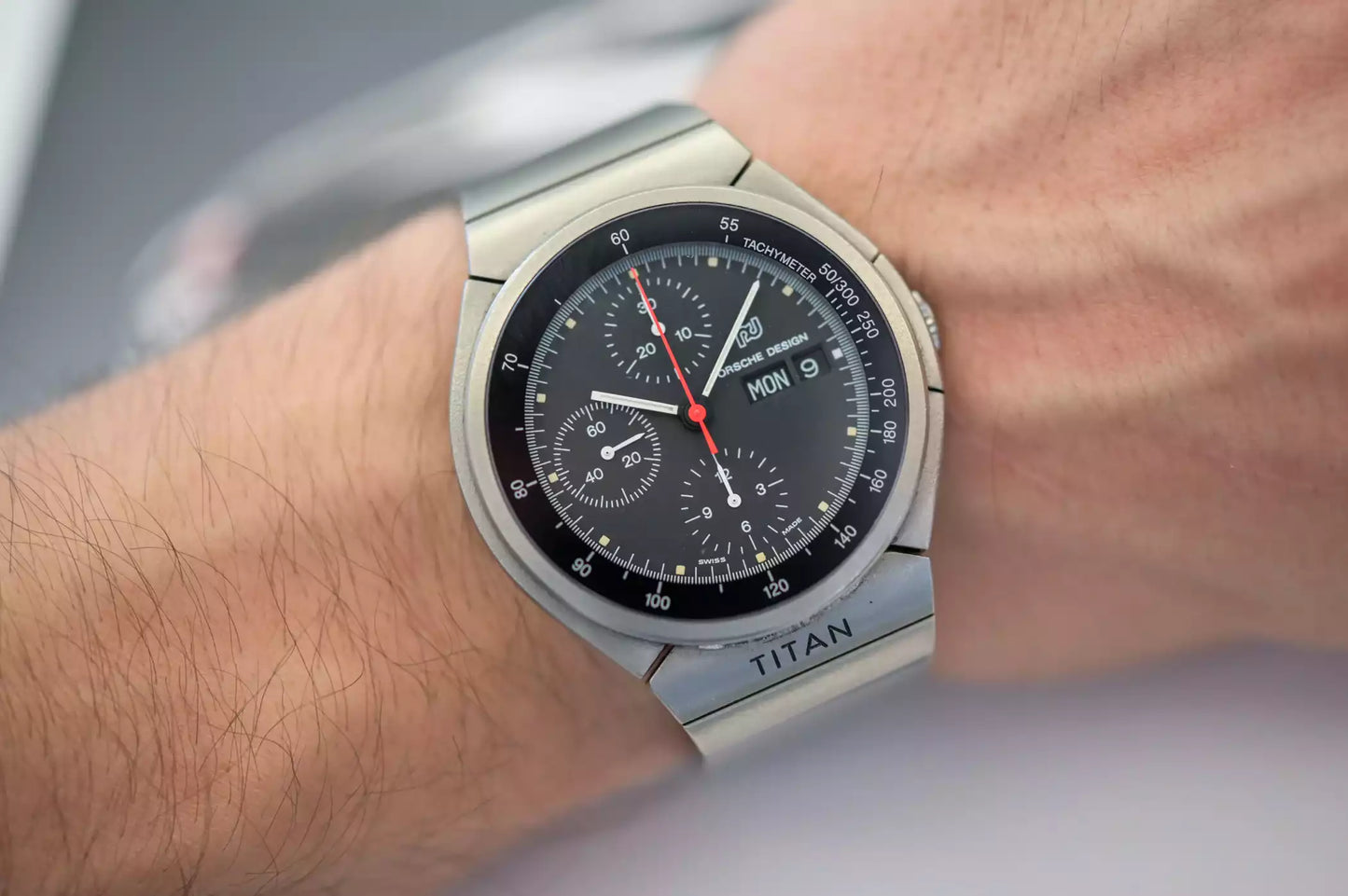
In 1980, IWC unveiled another bulletproof material for its new watch : the world’s first titanium wristwatch, aka IWC Porsche Design Titan Chronograph (Ref. 3700). By liaising closely with experts from the French aviation and aerospace companies, the engineers from Schaffhausen had acquired the expertise needed. Since then, titanium watches have remained a fixed part of the brand collections, especially as members of the Pilot’s Watch and Ingenieur ranges. As well as being lightweight, another key advantage of using titanium in the manufacture of watches is its big strength. Titanium has the highest strength-to-density ratio of any metal, making it resistant to scratches and corrosion. This ensures that the titanium watch remains in perfect condition for years, even with regular use.
With the Grande Complication, a wrist chronograph with perpetual calendar, minute repeater, and moon-phase display, the manufacture achieved in 1990 a master stroke in Haute Horlogerie precision after no less than seven years of development. For those of you who didn’t know this masterpiece, here’s a little heads-up : the precise interplay of 659 individual mechanical parts and years of experience in the art of watchmaking make so many different complications possible. Apart from the chronograph functions, a perpetual calendar with displays for the date, day, month, year, decade, and century, as well as a perpetual moon phase, mechanically programmed until 2499, are included. And the ultimate achievement in the art of mechanical watchmaking : the minute repeater.
Let’s take a leap in time to launch in 2002 at the Salon International de la Haute Horlogerie (SIHH) in Geneva. IWC presents the Grande Montre d'Aviateur, featuring a seven-day movement, automatic winding, power-reserve display, and date display, reviving the tradition of Grandes Montres d'Aviateur perpetuated by IWC. Also named “Grosse Fliegeruhr”, this big model (46.2 mm in diameter) was identical in design to its 1940 predecessor, but with an eight-day power reserve. This very first Grande Montre d'Aviateur came in several variations: a stainless steel model, two limited editions in platinum, and a transitional model with a new, faster movement, presented in 2006.
Marking the entry in the 20th century, we notice the shift to in-house movements in 2000, after the acquisition of IWC by the Richmond Group. The most momentous change occurred that same year, with the important introduction of IWC’s calibre 5000. For the first time in two decades, a movement was completely designed, manufactured, and assembled in-house. Its winding used the proprietary IWC Pellaton system, originally introduced in the 1950s. With this 8-day automatic movement, IWC returned to the hallowed halls of movement manufactures.
Keeping this innovative spirit, IWC became one of the most committed brands on the watchmaking market. They started numerous ecological projects in order to help sustainable watchmaking grow. Let’s start with their actions in Spanish waters : in collaboration with local associations and marine scientists, they finance planting carbon-capturing seagrass. This pioneering approach will reverse biodiversity loss and combat climate change.
In 2022, after two years of R&D and in close collaboration with Natural Fiber Welding®, IWC was the first in the industry to introduce a watch strap made with MIRUM®, a bio-based, completely plastic-free, and ‘return to earth’ material. MIRUM® does not contain any petrochemicals and has a low carbon footprint. The result : a watch strap that is less resource-intensive to produce than animal or synthetic leather.
Other than that, IWC encourages everyone’s access to sports through the Laureus Sport for Good Foundation. The Swiss brand is also very careful in their buildings about recycling, water use, and making sure to use renewable energies. All we can say is that they truly are giving their best to keep their announced promise of “Engineering Beyond Time”.
From its unique origin story blending American innovation and Swiss precision to its century-long legacy of technical breakthroughs, IWC Schaffhausen truly stands out in haute horlogerie. What sets IWC apart in the competitive world of luxury watches is its masterful balance of aesthetics, durability, and innovation. Every IWC timepiece is more than just a watch—it’s a story of craftsmanship, cutting-edge materials, and purpose-driven design. Offering a big range of material possibilities, different size cases, and color options like gold, silver, blue, and black is their best way to satisfy all men on Earth.
Whether it’s pioneering anti-magnetic pilot’s watches, developing revolutionary automatic calibers, or embracing sustainable technologies, IWC never compromises on excellence. Its watches are engineered not only to endure the harshest conditions but also to exude timeless elegance and refined style, just like our ZEALANDE straps.